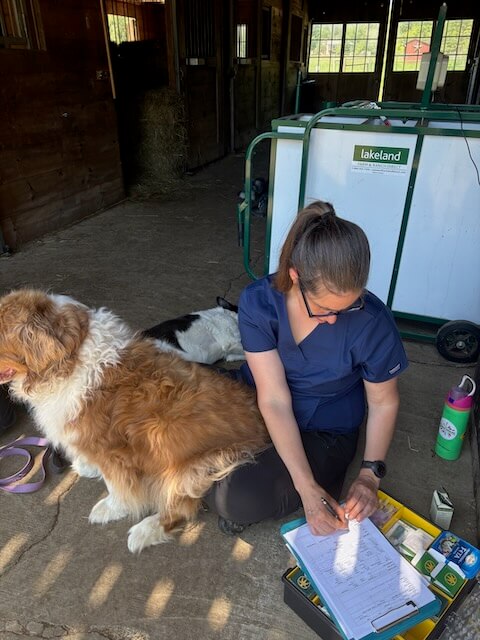
Dr. Johnson is now offering veterinary acupuncture care for livestock, dogs, and various other critters on a case-by-case basis. Through the veterinary acupuncture certification course at Chi University, Dr. Johnson studied Traditional Chinese Veterinary Medicine (TCVM). TCVM highlights the interconnectedness of the body. In practice, Western methods are integral to pinpointing diagnoses and effective treatment of infections, bone fractures, lacerations, cancer and many other conditions. TCVM adds an additional perspective and identifies a “pattern.” Acupuncture offers pain relief, supportive care, and restoration of neurological functions.
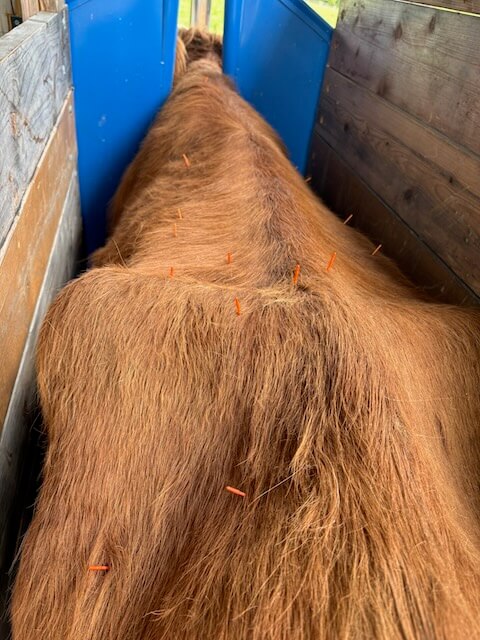
Multiple studies in humans and animals have shown that acupuncture releases endogenous opioids and endorphins that relieve pain. In fact, in lame horses, electroacupuncture has been shown to provide more significant back pain relief than phenylbutazone (“bute”), with the pain continuing to be less for up to 2 weeks following a single session. Among all critters, less reliance on medications is advantageous. In food animal medicine, which is the majority of CALVS work, acupuncture provides a food-safe option for supportive care. Moreover, Dr. Johnson has incorporated pattern diagnosis into her routine physical exam and, where beneficial, incorporates needling into the course of treatment, adding value to a single farm visit. For example, in the last few months Dr Johnson placed acupuncture needles before proceeding with cleaning or suturing or IV fluids. This care resulted in reduced anxiety for animals, improved gastrointestinal motility, reduced inflammatory heat, and improved immune response.
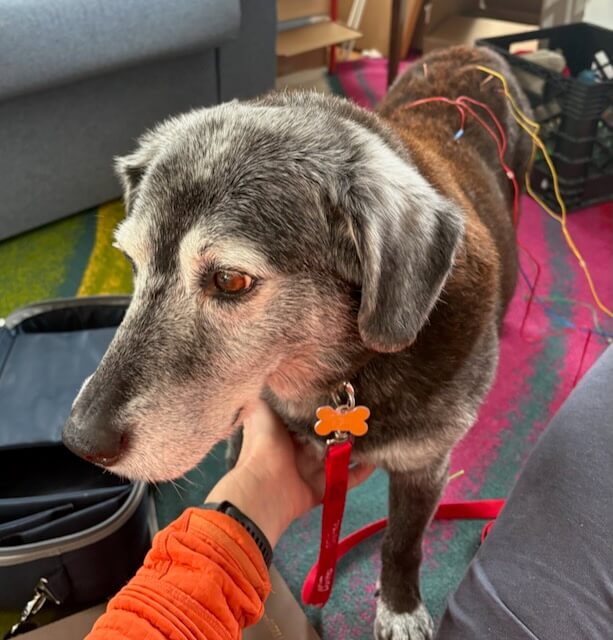
In dogs with intervertebral disc disease (IVDD) and arthritis, electroacupuncture results in significant improvement of mobility. In younger dogs with spinal injuries, surgical intervention is strongly recommended, although acupuncture does aid with overall recovery. In geriatric dogs, veterinarians are often concerned about anesthetic risks and owners are more concerned about quality rather than length of life. Acupuncture relieves pain and inflammation, thereby greatly impacting quality of life.
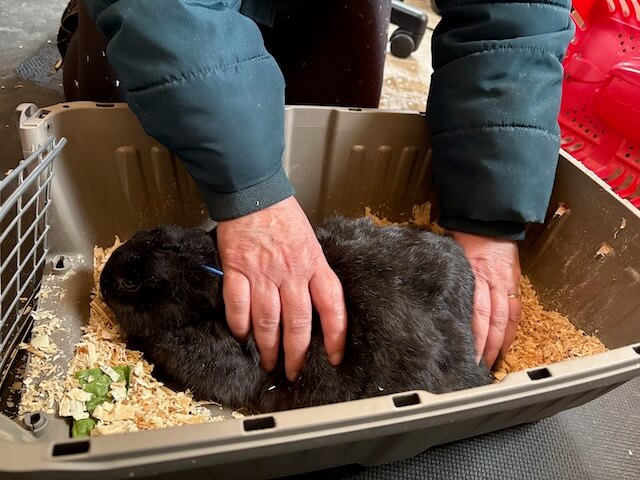
Various neurological conditions occur across species and acupuncture helps to restore neurologic dysfunction. Partial paralysis due to trauma or meningeal worm are common in livestock. Dr. Johnson needled a rabbit that was not fully paralyzed but did have a partially dislocated lumbar spine. She needled young goats with various traumatic injuries that were ataxic due to imbalance. She needled a llama that had a weak cheek that resulted in near constant oral feed impactions. She used aquapuncture (vitamin B12 injections) to straighten an alpaca with a curved spine, which was an incidental finding during a routine incisor trim. She needled a duck with a variety of problems that indicated Qi deficiency and was rewarded near instantly with a more energetic “quack.”
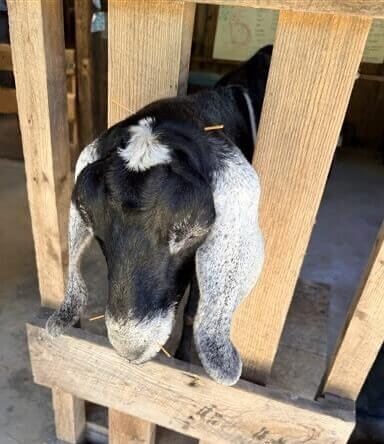
Acupuncture boosts immunity furthering an animal’s ability to clear infection. For bacterial infections, antibiotics are often necessary. However, care must be taken to use the right antibiotic at the right dose and given by the correct method to the species at-hand. Moreover, for food animals, care must be taken to ensure that medicines of any kind, are fully cleared from the animal’s body prior to being used for food. This is especially important for lactating animals, when their milk is used for food. In modern Western protocols, dairy cows with localized signs of mastitis, have their milk sampled and cultured prior to starting treatment with antibiotics. In many cases, the culture comes back negative, demonstrating that the cow has cleared the infection on her own. Recently, Dr. Johnson followed this standard Western protocol for caring for some goats with mastitis, and added her TCVM evaluation and acupuncture needling to the treatment. The response to acupuncture was profound, rapidly advancing the immune response, resulting in the same outcome albeit overnight instead of after several days.
Some skin and respiratory conditions have an underlying imbalance. These can also benefit from TCVM evaluation and acupuncture care. Equine Asthma Syndrome, which includes heaves, is among the conditions that acupuncture can help resolve.
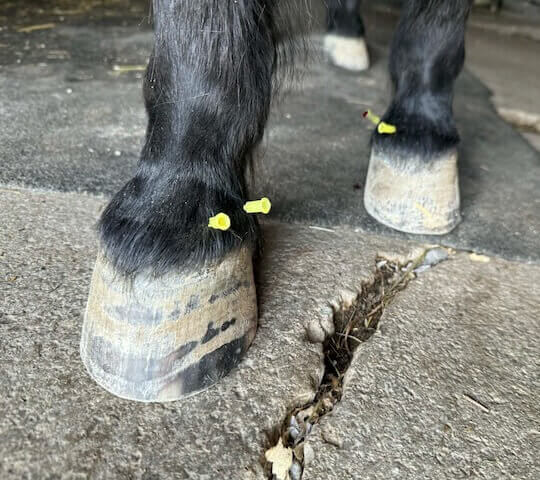
Acupuncture can have an anti-inflammatory effect. Inflammation results in heat in various parts of the body. Traditionally, non-steroidal anti-inflammatories (NSAIDS) are used to relieve fevers and pain. Acupuncture offers another approach to relieving inflammation with no side effects and NSAIDs can be used concurrently. Faced with a febrile animal, Dr. Johnson will do the Western medicine, providing antibiotics and NSAIDS as appropriate, but also try to relieve heat immediately through dry needling and, in some cases, bleeding. The gold standard of treatment for laminitis (“founder”) in horses is to cool the coronet band rapidly and repeatedly. Western medicine uses ice, snow, and very cold water applied to the hooves to accomplish that goal. Acupuncture uses needles to release blood in that region. Both methods serve to cool the foot, relieve inflammation, and help save the structural integrity of the hoof wall laminae.
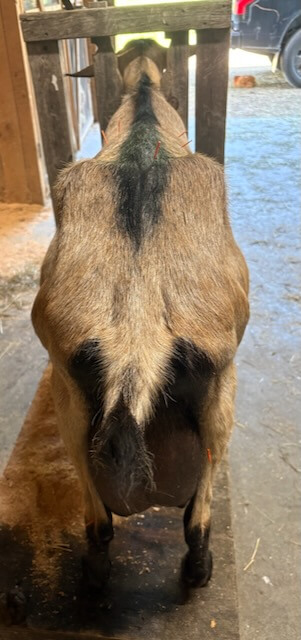
Goats notoriously develop reproductive problems including inappropriate lactation, false pregnancy, inability to get pregnant, and birthing challenges. Alongside Western medicine, TCVM evaluation and acupuncture can help regulate hormones and the reproductive system. Dr. Johnson had a dairy goat patient that had subtle signs of being off for months. She had gotten bred, but seemed to have lost the pregnancy. She didn’t have signs of a false pregnancy. She stopped being the alpha leader in the herd and was generally isolating herself. She had a rough hair coat and didn’t want to eat breakfast, but she would eat at other times of the day and was not losing weight. She just wasn’t right. She didn’t need to be dewormed, she didn’t have a fever, she didn’t have an infection of any kind. Dr. Johnson did a TCVM evaluation and placed needles in the goat. The goat tolerated the first set of needles aimed at the reproductive system, but really relaxed when more needles were placed to target other systems. She stood, nearly falling asleep, in a milk stantion for about 30 minutes. Then she stretched, Dr. Johnson pulled the needles and both went on their way. Two weeks later the goat in question was totally back to normal. It took those two weeks for the different parts of her body to restore balance and she’s been fine since.
The science of acupuncture has exploded in the last 25 years. Insurance companies will often cover acupuncture as part of care for chronic pain conditions in people. There are ongoing discoveries regarding what acupuncture does and does not do. TCVM uses confusing terminology for Westerners, which in many cases sounds like a direct translation, but is not. When Dr Johnson verbalizes patterns, goals, and treatments, she will use organ names and terms like Qi, Blood, Body Fluid, and Phlegm. These words mean different things in TCVM than they do in our Western vocabulary and “Qi” itself has no translation or scientific understanding. However, we do know that where there is “Qi stagnation” there is pain. And when Qi flows freely, there is not pain. And we know that acupuncture resolves pain. So even though the terminology is confusing, the outcomes are beneficial.
Unique to horses, patterns of acupuncture point sensitivity can help pinpoint areas of pain in a horse’s body, including specifying which foot, fetlock, hock, stifle, hip, or internal organ is of particular concern. The Western physical exam together with a TCVM pattern can help guide further diagnostics and treatments. In some cases, Dr Johnson has done just the exam and then discussed next steps with the horse owners. In some cases, referral care is recommended.
Finally, acupuncture is safe. Veterinarians are well-versed in poking animals with needles. The needles used in acupuncture have various lengths, thicknesses and they are solid. Despite a feeling of being poked, the needles actually glide between cells instead of cutting them, causing minimal skin damage. Acupuncture relies on a pattern diagnosis to explain systems of the body that are out of balance and aims to place needles to signal to the brain that the associated structures need attention. Any particular acupoint can be out of or in balance. For example, a single acupuncture point can be used to treat constipation and diarrhea. If a needle is placed in that same point and there is nothing out of balance in that system, the needle will do nothing except potentially instigate a quick kick to the veterinarian.